Before the First Strand
Our story begins with women artisans in Tanzania, more than 300 rural women who weave our bags in Iringa, in the southern highlands, through Vikapu Bomba. Their work carries a tradition, but it also supports homes, children and hopes for the future.
The women walk about four hours there and back to gather milulu grass along rivers, carrying it home before any weaving begins. For the full making process, read From Grass to Bag: How a Tanzanian Basket Is Woven by Hand.
Women Artisans in Tanzania
Work close to home
The women live in four districts across two regions, Iringa and Njombe. They weave in small groups in their own villages, at home or close to it. This allows the work to fit around farming and family life.
Many of the women are widows, and the work supports their families. Vikapu Bomba calls each weaver mama, which means mother. Each woman brings her own hands, patience and sense of care to every handwoven basket bag.
No two pieces are exactly alike. A small change in color or weave is not a flaw. It is a quiet sign that a real person made the work.

Catherine, and Why She Went to the Villages
A beginning with six women
Catherine Shembilu started her first weaving group in 2011 while she was still a student. It began with six women weavers.
A friend overseas, a doctor in Finland, had asked Catherine to find handwoven baskets to give as gifts. Catherine found an Iringa basket in the town market, but she wanted better quality. She also wanted the money to reach the women who made the baskets.
So she went to the villages and began buying directly from the weavers. One woman agreed to work with her and brought in others. That first group became six women.
Catherine learned that the women had been selling their baskets so cheaply that the work barely supported them. Many had stopped weaving altogether because there was nowhere to sell. Catherine saw that a fair, direct connection could help the women continue a skill they already carried.
From Six Women to More Than 300
A growing circle
- 2011: Catherine began with six women weavers.
- 2013: Their first large market sale in Dar es Salaam sold out quickly. A second weaving group formed straight afterwards.
- 2015: Vikapu Bomba was formally registered with 45 weavers.
- 2016: The group had more than 60 weavers.
- 2023: Vikapu Bomba won a grant of about $100,000 from the U.S. African Development Foundation after being chosen from more than 250 applicants in Tanzania. A program funded by the same foundation trained 130 more rural women in fine basket making.
- Today: More than 300 women weave across four districts and two regions. They have made more than 70,000 baskets, sold in 21 countries.
Vikapu Bomba means fantastic baskets in Swahili. The name reflects the quality of the work, but the story is larger than the baskets themselves. It is also about women working together and being seen for what they can make.
How the Work Is Organized
Skill shared from one woman to another
Each group has a lead weaver who trains new members and checks the quality of every piece. A new weaver works beside an experienced one for about two months, until her work meets the standard.
The women also learn bookkeeping, quality control and how to run a group. They are paid for each piece they make, at prices agreed with the women themselves. They now earn three to four times what they earned from weaving before.
Each piece is woven by one woman’s hands from start to finish.
That care is present in every row. It is also why the maker remains central to the story.
What the Work Has Changed
Income with a place to go
The weavers say they can cover household costs and put enough healthy food on the table. Most put part of what they earn into village savings groups. Those savings help pay for school fees, school uniforms, health costs and help on the farm during planting and harvest seasons.
Many have moved their children to better schools in town. Some have started a second small business. Others have invested in farming and livestock.
One weaver with a disability joined in 2013. At the time, she lived with her five children in one small room with no window. Through what she earned from weaving, she bought land, built a two-bedroom house and put her children through school.
The longest-serving weaver is the woman who helped Catherine find the very first group. Her weaving sent her child to university and her grandchildren to school.
Earning their own money has given the women a voice in decisions at home and in their communities. Catherine believes women achieve more when they work together. She also believes steady income gives rural women control over their own money and restores their pride.
What This Means in Your Hands
The makers remain visible
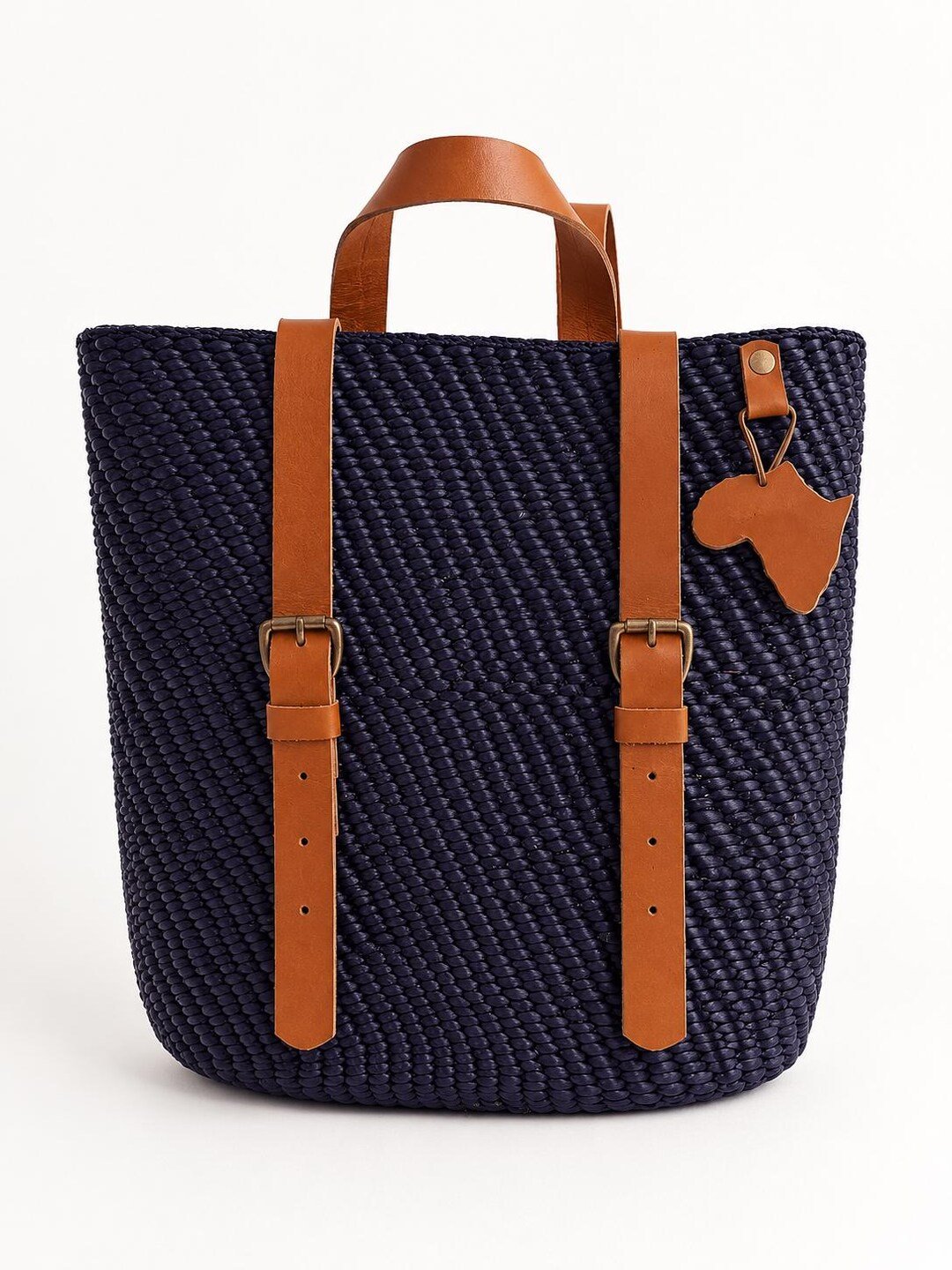
In Iringa, Tanzanian leather straps and handles are attached by hand, and each piece is checked before it is packed. From Iringa, the bags travel to Denver, Colorado, where Fariji Cannon, who was born in Iringa, packs and ships every order.
Catherine’s label goes on every bag beside ours. That matters because the makers should remain visible in the story of what they have made.
When you choose a bag, you are receiving something shaped by a woman’s time and skill. A blessing carried forward.
Two pieces to explore are the Navy Blue Backpack, $170 and the Large Sage Green Tote, $125.
FAQ
Who weaves Fortress of Blessing bags?
The bags are woven by the women of Vikapu Bomba. More than 300 rural women across the Iringa and Njombe regions weave with the enterprise.
Where in Tanzania are the bags made?
The bags are handwoven in Iringa, in the southern highlands of Tanzania. The women live and work across four districts in the Iringa and Njombe regions.
How is the work organized around family life?
The women weave in small groups in their own villages, at home or close to it. This allows the work to fit around farming and family.
Shop on Etsy
You are warmly invited to explore the collection on Etsy and find the piece that feels like yours.
Made by her hands. Carried by yours.