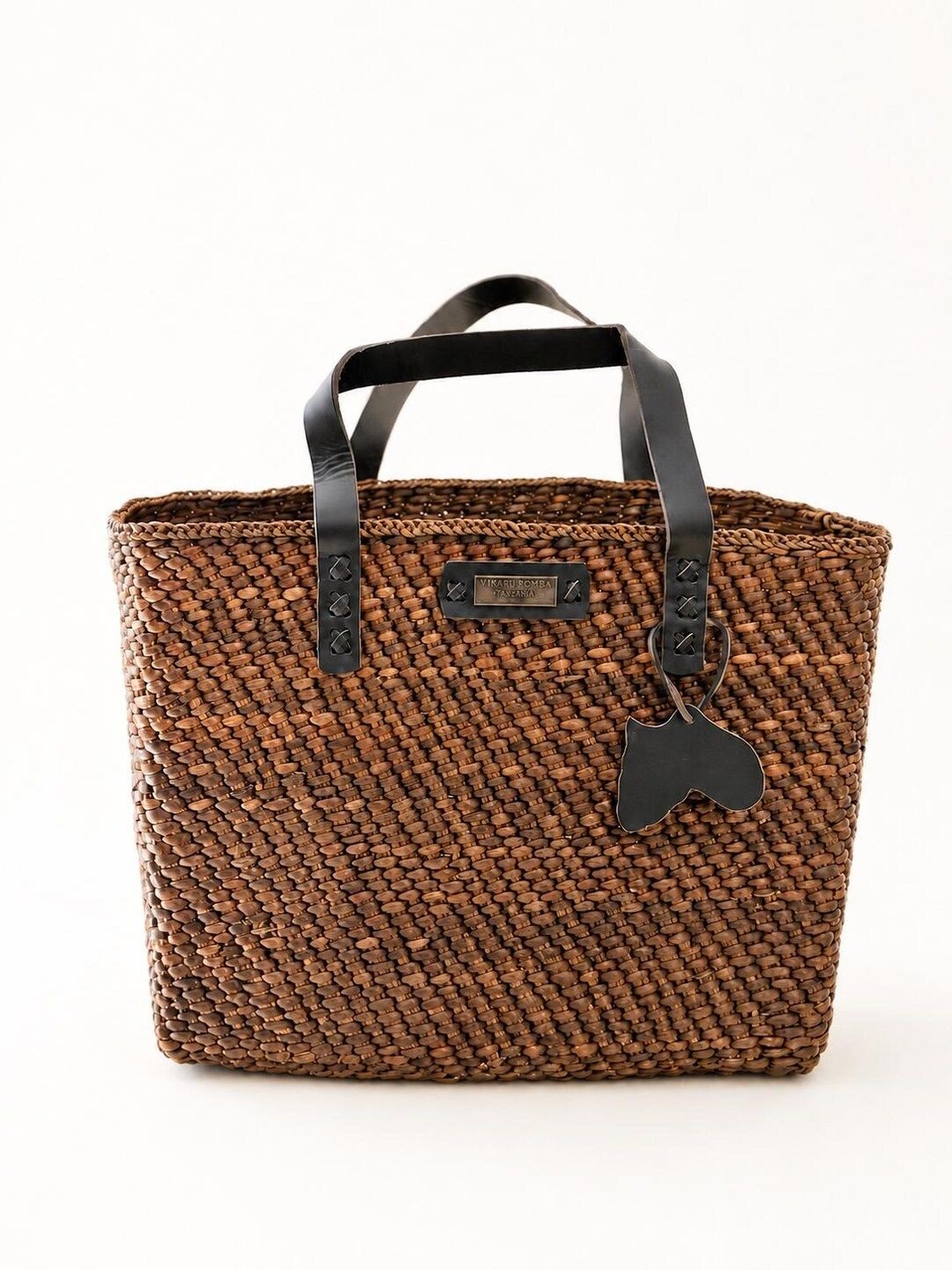
Our bags are handwoven from milulu grass in Iringa, Tanzania. Each handwoven tote bag, crossbody, backpack, and bucket bag begins with grass gathered along rivers and streams, then passes through many careful hands before it reaches you.
The process takes time. It carries tradition. It also carries the care of more than 300 rural women across the Iringa and Njombe regions.
Here are the seven steps behind every Fortress of Blessing bag.
1. Milulu Grass, the Beginning of a Handwoven Basket Bag
Milulu is a reed-like grass that grows along rivers and streams in the southern highlands of Tanzania.
It is the beginning of every bag made through Vikapu Bomba, a social enterprise in Iringa. The grass is gathered by hand and prepared for weaving. Once it has been dried and split, it becomes the material for an African basket bag with a story rooted in place.
A milulu grass basket is not made from a factory roll or a uniform sheet. Each strand carries small differences in color, thickness, and texture. Those differences remain visible in the finished piece.
They are marks of real hands.
Basket weaving is a long tradition of the Hehe people of Iringa. In the region, a basket has long been an everyday tool. It can be used for market days, carrying food, or taking grain to the mill.
Our bags grow from that practical tradition. They are made for modern carrying, but their beginning remains close to home.
2. Gathering the Grass for a Tanzanian Basket Bag
The women walk to where the milulu grows. The journey takes about four hours there and back.
They carry the grass home after it is cut. The plant is cut in a way that allows it to grow back. This careful gathering is part of the work, long before a pattern begins to appear.
It is easy to see only the finished woven market tote. The walk to the river is less visible. Still, it belongs to the bag.
Every piece begins with time given to the material.
The women of Vikapu Bomba weave in small groups in their own villages. This allows the work to fit around farming and family. Each group has a lead weaver who trains new members and checks the quality of the work.
The process remains close to the communities where the grass grows.
3. Preparing the Milulu Grass
When the grass reaches home, it is cleaned and laid in the sun to dry for a day or two.
After drying, the grass is split and bundled. Strands that will carry color are dyed before weaving. The prepared strands are then ready to become the body of a bag.
Preparation may look quiet, but it shapes the work that follows. The strands need to be ready for the hands that will guide them. They need to sit together in a pattern that is both strong and beautiful.
This is where the raw material begins to take on purpose.
The color combinations vary across the collection. Some bags hold natural tones. Others bring together black, gold, sage, brown, or burnt orange. The pattern comes from the way the prepared strands meet one another.

4. Weaving Every Handwoven Tote Bag by Hand
Every bag is woven entirely by hand in traditional patterns by the women of Vikapu Bomba.
No machine completes the woven body. The shape develops strand by strand. The work requires attention, patience, and a steady understanding of the pattern.
A crossbody takes about two days to weave. A backpack takes five to seven days. A tote takes seven to nine days.
These times describe the weaving only. They begin after the grass has been gathered and dried.
The process explains why no two bags are exactly alike. Small differences in color and weave are not flaws. They show where one person’s hands guided the work.
Handmade, from beginning to end.
The Oversized Brown Market Tote is one example of this work. It is priced at $148 and carries the warm, grounded character of a traditional market basket in a larger everyday form.
For a smaller shape, the Black Crossbody with Tan Strap is priced at $100. Its handwoven body and leather strap bring the same Tanzanian craftsmanship into a more compact design.
Both pieces are made slowly. Both carry a connection to the people and place behind them.
5. Leather Straps, Handles, and the Final Check
Once the woven body is complete, Tanzanian leather straps and handles are attached by hand in Iringa.
The finishing work gives each bag its way of being carried. Handles may shape a tote for the hand or shoulder. A strap allows a crossbody to rest more easily across the body. Leather brings another natural material into the design.
Each piece is checked before it is packed.
The label from Catherine Shembilu’s enterprise, Vikapu Bomba, goes on every bag beside ours. Vikapu Bomba means “fantastic baskets” in Swahili. The name recognizes the work of the women who weave each piece.
Catherine started Vikapu Bomba in 2011 with six women weavers. Today, more than 300 rural women across the Iringa and Njombe regions weave with her.
Many of the women are widows. The work supports their families. Women are paid per piece at prices agreed with the women themselves. They now earn three to four times what they earned from weaving before.
The bag is not only finished by hand. It is connected to a wider circle of work and care.
6. From Iringa to Denver
After the bags are finished in Iringa, they begin a new part of their journey. They travel from Iringa to Denver, Colorado.
This movement connects two places without taking the first place away. The bag remains a piece of Tanzanian craft. It simply continues its journey.
Fariji Cannon was born in Iringa and now lives in Denver. From our small shop, the bags are prepared for their next homes.
A Tanzanian basket bag can travel far. Its story still begins beside the rivers and streams of the southern highlands.

7. To You, One Bag at a Time
Fariji packs and ships every order.
Each bag reaches one person. That may be you.
By the time your bag arrives, it has passed through a long chain of care. The grass was gathered. It was carried home, cleaned, dried, split, and bundled. It was woven in a village group. Leather was attached in Iringa. The finished bag traveled to Denver.
Then Fariji prepared it for its final journey.
That is what a handwoven basket bag holds. Not only the visible weave, but also time, place, and connection.
A natural variation may remain in the color or pattern. Please receive it as part of the making. It is evidence that the bag was made by people, not produced to look identical.
What Shoppers Ask About Our Bags
Where are Fortress of Blessing bags made?
Our bags are handwoven in Iringa, in the southern highlands of Tanzania, by the women of Vikapu Bomba. They are then shipped from Denver, Colorado.
What are the bags made of?
The woven bodies are made from milulu grass. The grass is gathered along rivers and streams, dried in the sun, split, and woven by hand. Tanzanian leather is used for the straps and handles.
How long does one bag take to make?
The weaving time depends on the style. A crossbody takes about two days. A backpack takes five to seven days. A tote takes seven to nine days. These times refer to weaving after the grass has been gathered and dried. We do not have a confirmed weaving time for the bucket bag.
Carry the Story Forward
A Fortress of Blessing bag begins in Iringa and continues through many hands before it reaches you. It is made with patience, shaped by tradition, and sent with gratitude.
Explore the collection through our Etsy shop, and find the handwoven bag that feels like the one that is yours.