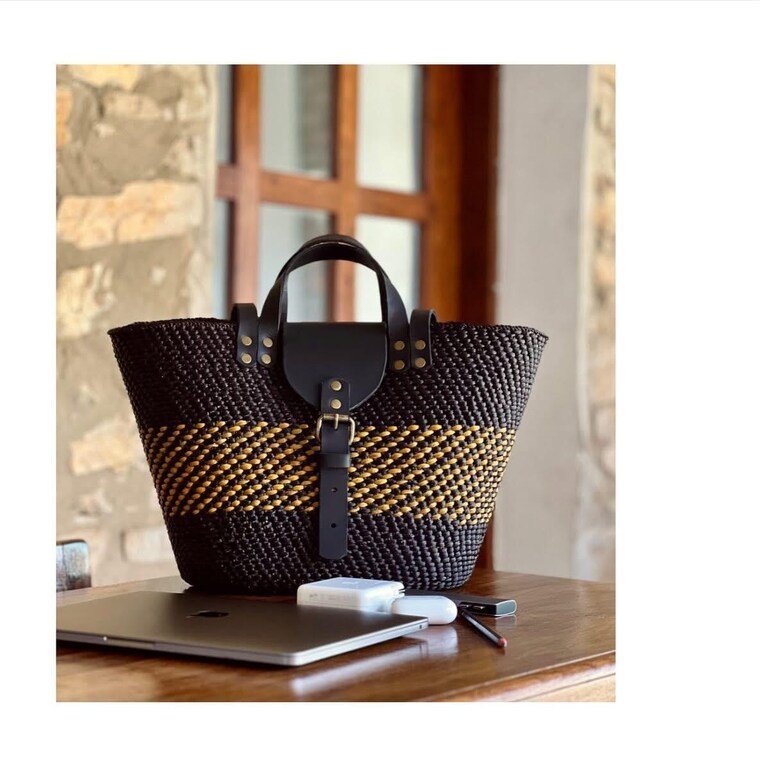
Seven to nine days. That is how long it takes to weave one of our larger totes by hand, after the milulu grass has already been gathered, cleaned, dried, split, and bundled.
A handwoven tote bag is not made in one quick step. It is built strand by strand, with traditional patterns, steady hands, and time. The finished piece becomes a woven market tote, a handwoven basket bag, and a useful reminder of the women and heritage behind it.
The time is part of the story.
The Weaving Time
Why a woven market tote takes patience
A machine-made bag can repeat the same shape again and again at a fast pace. A handmade bag follows a different rhythm.
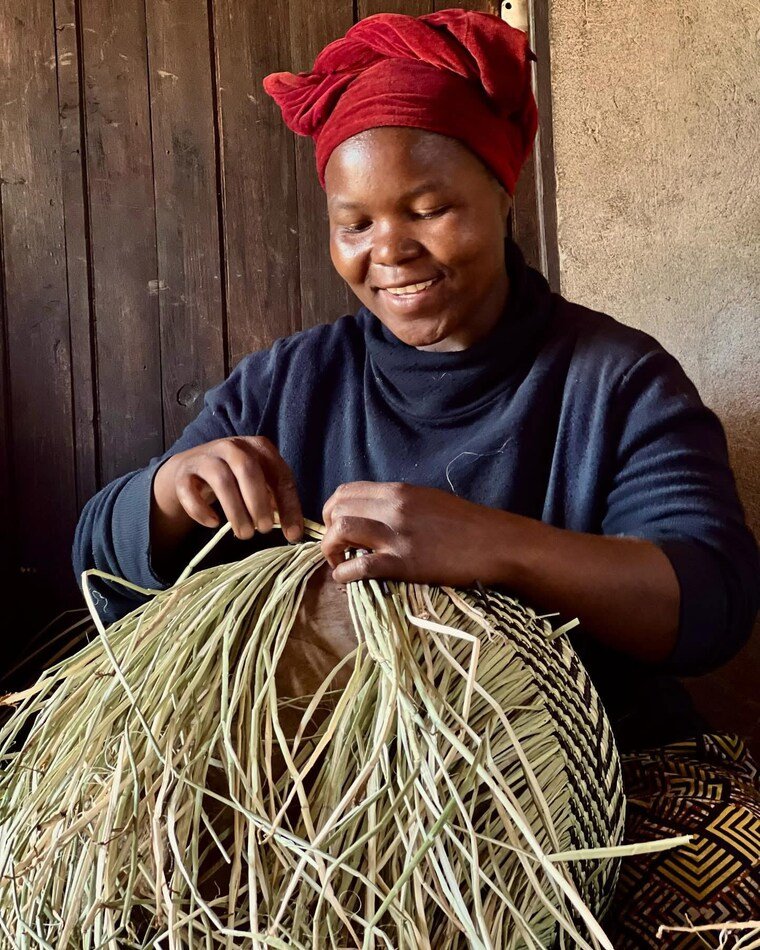
The woman weaving each Fortress of Blessing tote builds the piece from start to finish. She works the prepared milulu grass into its pattern by hand. Each strand has to be placed, tightened, and guided into the shape of the bag.
The work is careful. The pattern must hold. The edges must come together. The body of the tote must keep its form.
This is not seven to nine days of preparation, packaging, or shipping. It is seven to nine days of weaving alone.
A crossbody takes about two days to weave. A backpack takes about five to seven days. We do not give a weaving time for the bucket bag because that timing has not been recorded for us.
The larger size and fuller shape of a tote require more time. So do the details within the pattern. The work cannot be hurried without changing the character of the piece.
100% handwoven.
From the Rivers
How a milulu grass basket begins
Before weaving starts, the milulu grass must be found and gathered.
Milulu grass grows along rivers and streams in the southern highlands of Tanzania. Gathering it can mean a four-hour walk. The grass is carried home, cleaned, and dried in the sun for a day or two. Then it is split and bundled so it is ready for weaving.
The grass begins as a plant along the water. It becomes a useful material through preparation. It becomes a bag through patience.
In Iringa, baskets have long been part of everyday life. The Hehe people have passed basket weaving from mother to daughter. A basket can be used for market days, for carrying food, or for taking grain to the mill.
Our bags grow from that living tradition. They carry the memory of an everyday tool into a form you can take with you.
The Makers
One woman, one piece, start to finish
The women who weave our bags are part of Vikapu Bomba, a social enterprise in Iringa, in the southern highlands of Tanzania. Vikapu Bomba means “fantastic baskets” in Swahili.
Catherine Shembilu started the enterprise in 2011 with six women weavers. Today, more than 300 rural women across the Iringa and Njombe regions weave with her.
The women work in small groups in their own villages. This allows the work to fit around farming and family. Many of the women are widows, and their weaving helps support their families.
Each group has a lead weaver. She trains new members and checks the quality of every piece. A new weaver works beside an experienced weaver for about two months while learning the craft.
The women are paid per piece at prices agreed with the women themselves. They now earn three to four times what they earned from weaving before.
Every bag carries Catherine’s label beside ours. That matters to us. The makers should remain visible in the story of what they have made.
The Human Pattern
Why no two handwoven basket bags are exactly alike
No two Fortress of Blessing bags are exactly alike.
The color may shift slightly. The weave may have a small variation. One line in the pattern may not look precisely like the next. These differences are not flaws. They are the mark of real hands working with a natural material.
A machine can make a repeated surface look identical. A woman weaving by hand leaves small signs of her own rhythm in the work.
That is what makes each bag personal.
The variation also helps you recognize that your bag was not pulled from a line of identical products. One woman shaped it over days of careful work. A lead weaver checked it. Leather straps or handles were attached by hand in Iringa. The finished piece was checked again before it was packed.
Made with intention.
Two Totes to Carry
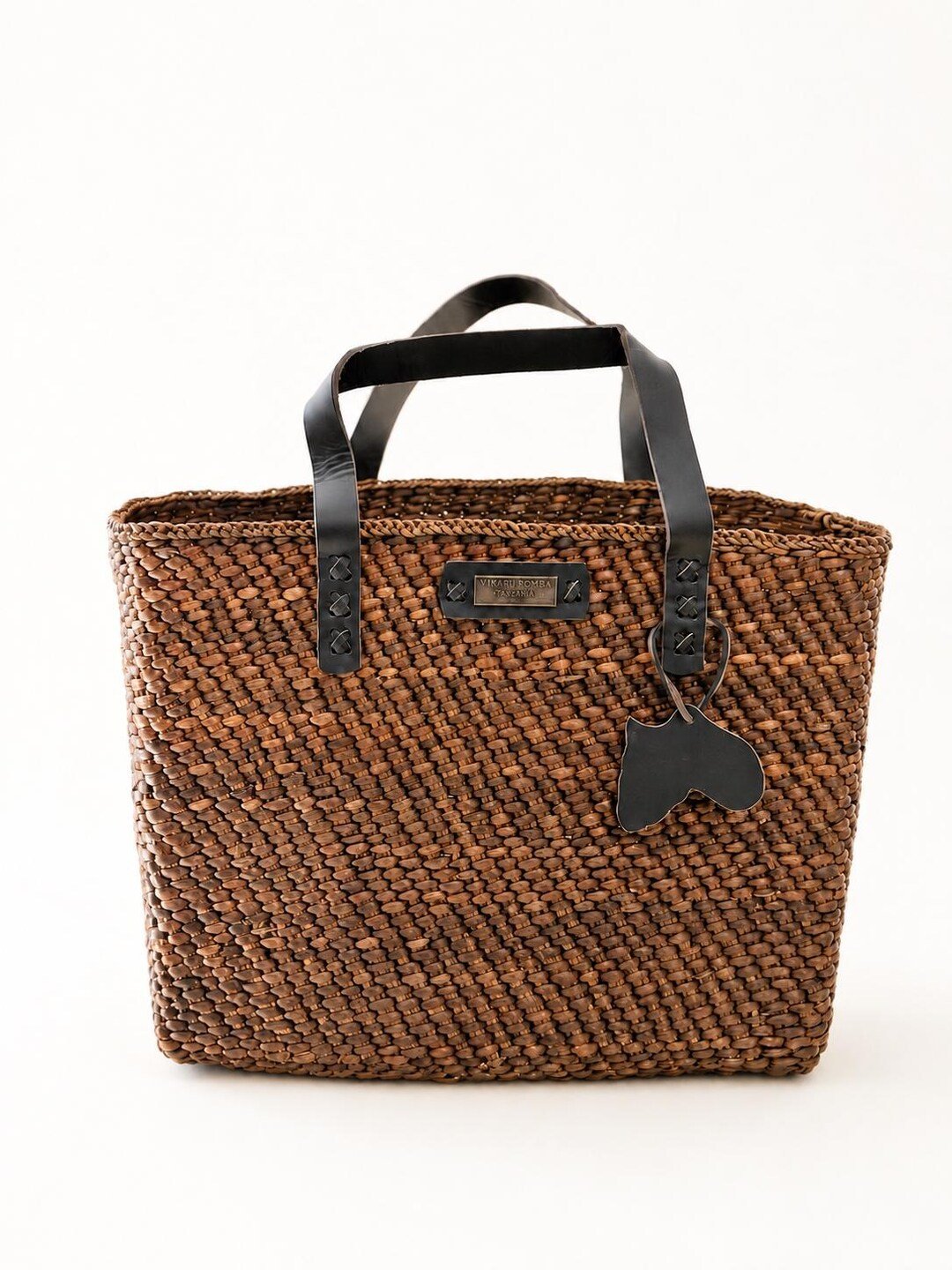
Large Brown Basket Tote, $125
The Large Brown Basket Tote shows the warm, natural character of milulu grass. Its handwoven surface has a quiet pattern and a grounded color. The leather handles and finishing details complete the piece by hand in Iringa.
It is a meaningful choice when you want an everyday tote with a clear connection to traditional basket weaving.
Large Sage Green Tote, $125
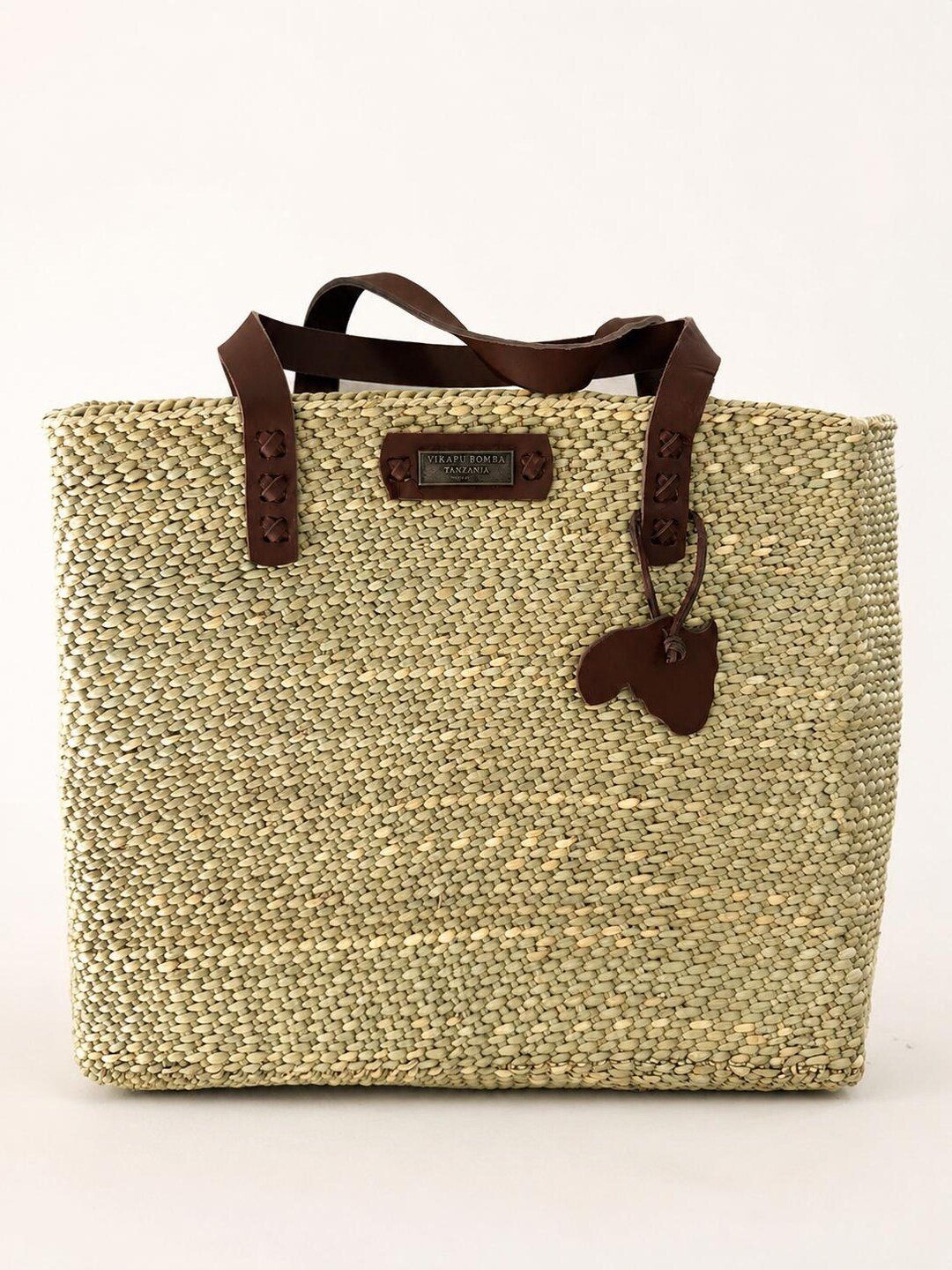
The Large Sage Green Tote carries the same handwoven tradition in a softer color. Small changes in the grass and weave give the surface its individual character.
For another shape, our collection also includes the Oversized Brown Market Tote for $148 and the Large Black and Natural Tote for $125. Crossbody bags and backpacks offer different ways to carry the same connection to Iringa.
From Iringa to Denver
A finished piece continues its journey
When the weaving is complete, the bag is not yet at its final destination.
The leather straps and handles are attached by hand in Iringa. Each piece is checked before it is packed. Then the bags travel from Iringa to Denver, Colorado.
Fariji Cannon, who was born in Iringa, packs and ships every order from our small shop in Denver.
This journey connects two homes. One is where the grass is gathered and the bag is woven. The other is where it is carefully prepared to travel to you.
The tote takes seven to nine days to weave. The grass took a four-hour walk to gather. The finished bag crosses an ocean before it reaches your hands.
Time stays with it.
Questions You May Have
How long does a handwoven tote bag take to make?
A tote takes seven to nine days of weaving. That estimate begins after the milulu grass has been gathered, cleaned, dried, split, and bundled. Gathering and preparation happen before the weaving time begins.
Why do handmade weaves differ slightly?
Each piece is woven by one woman’s hands from start to finish. Natural milulu grass also has its own changes in color and texture. Small differences in color and weave are signs of individual craftsmanship, not defects.
What are the bags made of?
Our bags are handwoven from milulu grass gathered along rivers and streams in Tanzania’s southern highlands. They are finished with leather straps and handles attached by hand in Iringa.
Carry the Time
A Fortress of Blessing tote is more than a finished shape.
It holds a four-hour walk, sun-dried grass, traditional patterns, and seven to nine days of weaving. It holds the work of one woman, the care of her group, and a partnership that reaches from Iringa to Denver.
It can be a thoughtful one of a kind gift for someone who values heritage, handmade work, and the quiet beauty of a real difference.
Find the one that is hers in our Etsy shop, and carry a piece of Tanzania with you.